


Play More Games










Play Microsoft Solitaire Game Online
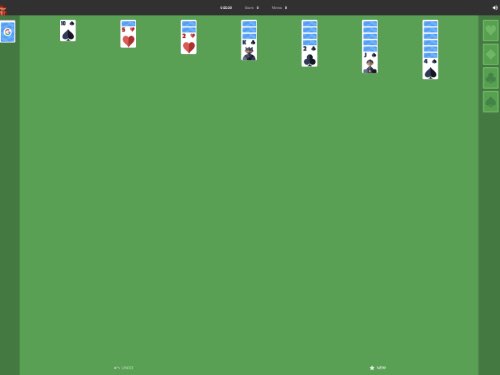
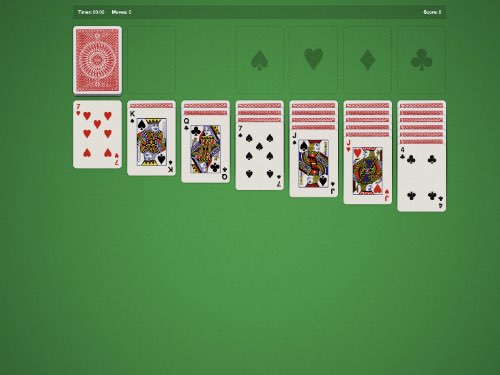
The game known as Microsoft Solitaire is a single-player game that involves moving and removing various pieces from a board. The game that is often played using a deck that contains 52 individual cards. The suits of the playing cards are spades (black), hearts (red), diamonds (black), and clubs. Each suit has a corresponding colour (black).
Klondike Solitaire, also known as "classic Solitaire," is one of the game modes available in Microsoft Solitaire, along with Spider, FreeCell, Pyramid, and TriPeaks, as well as daily challenges. Microsoft Solitaire was designed by Microsoft Studios and developed by Smoking Gun Interactive (formerly Arkadium).
The other themes are distinct from the default theme, which is analogous to the default theme for card games seen in Windows Vista and Windows 7, respectively. The ability for users to generate their very own unique themes is also available.
In-game music, cloud syncing, and deeper connectivity with Xbox Live are some of the other new features. The hidden debug menu that was featured in traditional card apps has been removed, and the drop-down menus have been replaced with a global hamburger menu, in-game tip buttons, and undo buttons that are located at the bottom of the screen. (In the Windows 8 version, the hamburger menu was replaced with the Charms bar, which is concealed from view.)
How to Play Microsoft Solitaire Game
When a player wins a game, the computer programme will select a card animation at random from a pool of animations that were included in earlier versions of Windows card games. An individual page within the application is devoted to providing statistics for the games Klondike, Spider, FreeCell, Pyramid, TriPeaks, Daily Challenge, and Star Club.
The original version of Microsoft Solitaire was made available for free download in the Windows Store for users of Windows 8. The solitaire games that had been previously provided in Windows for free since 1990 were not included in Windows 8 or Windows 8.1 and were uninstalled after upgrades from older operating systems. This is despite the fact that solitaire games had been featured in Windows since 1990.
Instead, Microsoft developed a version of Solitaire that was sponsored by advertisements and made it available for consumers to download through the Windows Store. Because it was a Windows Runtime application, it could either run in fullscreen or in the snapped mode of Windows 8. Because of this, it was designed to operate in a variety of horizontal proportions, but it would always stretch vertically across the entirety of the screen.
It was just in time for the celebration of the 25th anniversary of Microsoft Solitaire that the Windows 10 version was made available to Windows 10 beta testers and was preinstalled with the system in build 10061.
After the first release of Windows 10 to the public, Microsoft delayed the addition of certain personalization tools until later. The engineers explained that the delay was caused by significant code modifications that occurred throughout the process of developing Windows 10.
The newest version of Windows, Windows 10, was developed to scale dynamically in both the vertical and horizontal planes. Instead of using horizontal scrolling, the layout of the primary page has been reorganised to make use of vertical scrolling.
Some players were under the impression that the game they were playing was not actually Klondike due to the fact that the original "Microsoft Solitaire" was actually Klondike solitaire but did not use the Klondike branding.
Reportedly, the Microsoft Casual Games team received a lot of criticism demanding that they "Bring back the game mode from Windows 7," despite the fact that they had already done so.
The makers wanted to eliminate user confusion and make it easier for players to locate this game, so they changed the image of the enormous polar bear that was on the Klondike tile to a Klondike deck along with the words "Classic Solitaire."
Beta testers in the Microsoft Casual Games Inner Circle were able to get their hands on the mobile versions of Microsoft Solitaire for iOS and Android in August of 2016.
On November 23, 2016, it was made available to the general public on these many platforms. The vast majority of solitaire applications for iOS are compatible with Apple's Game Center, however this particular one is completely integrated into the ecosystem of Microsoft. Because these versions interface directly with the cloud service, it is not required to have the Xbox app installed on an iOS or Android device in order to synchronise data and accomplishments. This is the case even if both platforms support the Xbox app.