


See More Games





Play The Cube Game Online for Free
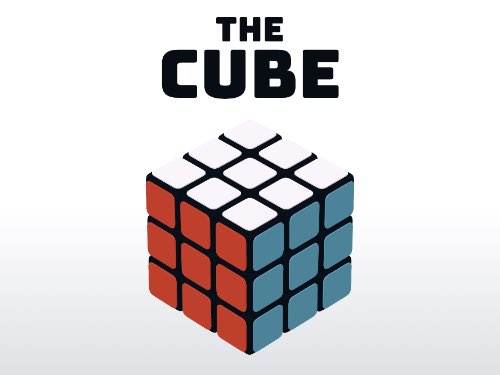
The Cube game, often known as Erno Rubik's Cube, is a 3-D combination puzzle developed in 1974. Rubik licenced the Magic Cube to Ideal Toy Corp in 1980 via Tibor Laczi and Seven Towns founder Tom Kremer. The cube became an international emblem in 1980. 1980 German Game of the Year Best Puzzle award. 350 million cubes had been sold by January 2009, making it the world's best-selling puzzle game and toy.
Each of The Cube's six initial faces had nine stickers in white, red, blue, orange, green, and yellow. Some upgraded cubes feature coloured plastic panels to avoid peeling and fading. White is opposite yellow, blue opposite green, and orange opposing red. Red, white, and blue are oriented clockwise. Early cubes' colour order varied. Each face may flip independently, combining the colours. Each face must be one colour to solve the problem. Not all Rubik puzzles have the same number of sides, size, or stickers.
The Cube's popularity peaked in the 1980s, but it's still popular. Many speedcubers continue to practise it and related puzzles and compete in various categories. The World Cube Association has organised events and recognised world records since 2003.
There are numerous iterations of The Cubes, each with a maximum of thirty-three levels. The most well-known of these are the 2x2x2 "Pocket/Mini Cube," the 3x3x3 "Standard Cube," the 4x4x4 "Revenge/Master Cube," and the 5x5x5 "Professor's Cube." Since 1981, the official brand has only licenced twisted puzzle cubes up to a size of 5x5x5, however these are no longer available. The "Over The Top" cube, which became available in late 2011, was, up until December 2017, the largest and most costly cube that was sold in a commercial setting. It had a price tag of more than two thousand dollars. Later on, the Chinese firm YuXin came out with a 17x17x17 that was available in large production. It was proved that a design for a cube with dimensions of 22 by 22 by 22 exists, and a design for a cube with dimensions of 33 by 33 by 33 was demonstrated in December 2017. As of May 2020, the Chinese producer ShengShou has been creating cubes in all sizes, ranging from 2 by 2 by 2 up to 15 by 15 by 15, and they have even released a 17 by 17 by 17 version.
The puzzle was described as having "nearly 3 billion combinations but one solution." Depends on how combinations are counted.
Commonly used by people who are into the 3x3x3 cube, "Singmaster notation" was created by David Singmaster. Due to its relative nature, algorithms may be built to work on any cube, independent of the orientation of its faces or the order in which its colours are displayed.
Despite the vast amount of possible combinations, the cube may be solved in fewer than 100 steps with a variety of different methods.
There are many generic solutions to the Cube that have been found separately. Notes on the "Magic Cube" by David Singmaster was where the solution was originally made public in 1981. This method entails breaking down the Cube into its constituent layers and then solving them in order, starting with the top layer and working one's way down to the bottom. When you've put in the time to master the technique, you can solve the Cube layer by layer in under a minute.
Methods commonly used by beginners typically entail layer-by-layer solution via algorithms that remember previous steps. Some layer-by-layer approaches are so simple that you can implement them using as little as three to eight algorithms.
Patrick Bossert, at 13, provided a solution and graphical notation for solving the cube in 1981. It became a best-seller as "You Can Do The Cube."
The utmost efficient course of action Cube solver software commonly employs Herbert Kociemba's Two-Phase Algorithm, which can find a solution in 20 moves or fewer. The user inputs the colour arrangement of the jumbled cube, and the computer then provides the necessary instructions for untangling it.